Sydney rock oysters are Australia's native oyster, and they take about three years in the water to reach the size you see on a plate. That slow growth is the whole point: it concentrates the flavour into something sweeter and more mineral than the larger Pacific oyster most of the world eats.
At Elements Bar & Grill they are the only oyster served, and they come three ways: natural, crudo and grilled, each ordered individually with a minimum of three. Below is what the species actually is, how it differs from a Pacific, what goes on each one, and how to order without overdoing it.
The Three Ways, Side by Side
| Style | Minimum order | What goes on it | Order it if |
|---|---|---|---|
| Natural | 3 oysters | Yuzu kosho tabasco mignonette, lemon. Dairy free and gluten free | You want to taste the oyster itself |
| Crudo | 3 oysters | Finger lime, tobiko caviar, mignonette | You want texture and citrus without heat |
| Grilled | 3 oysters | Calabrian chilli nduja butter, tobiko, pecorino | You are not sold on raw oysters |
A table of three or four usually lands on half a dozen natural and half a dozen grilled, which covers both camps without filling anyone up before the grill.
Oysters are priced per piece and the rate moves with the season and the grower, so check the a la carte menu for current pricing before you order.
What Is a Sydney Rock Oyster?
Sydney rock oysters are Saccostrea glomerata, a species endemic to Australia. They live in sheltered estuaries and bays from Hervey Bay in Queensland down to eastern Victoria, and most of what gets eaten in Sydney is farmed in NSW estuaries such as Wallis Lake, Port Stephens, the Hawkesbury and the Clyde River.
They reach about 60 grams in three years and can live for a decade. For comparison, a Pacific oyster puts on the same weight in a fraction of that time. The NSW species profile has the biology if you want the detail.
What that means at the table is a smaller oyster with a thicker, smoother shell, a creamy texture and a finish that reads sweet first and metallic second. They are not an oyster to drown in sauce.
Sydney Rock Oysters vs Pacific Oysters
| Sydney rock | Pacific | Verdict | |
|---|---|---|---|
| Species | Saccostrea glomerata, native | Crassostrea gigas, introduced | Rocks are the local one |
| Size | Smaller, about 60g at three years | Larger, grows much faster | Pacifics for volume, rocks for flavour |
| Shell | Smooth and thick | Thin, rough, frilly edges | Easy way to tell them apart |
| Mantle edge | Pale | Black | The giveaway on the plate |
| Flavour | Sweet, creamy, mineral finish | Brinier, more cucumber and melon | Rocks natural, Pacifics dressed |
Neither is better. They are different oysters, and a kitchen that serves only Sydney rocks has made a choice about which one it wants to stand behind.
What Is Mignonette?
Mignonette is the classic oyster dressing: finely diced shallot, vinegar and cracked pepper, left to sit so the shallot softens. It exists to cut richness with acid, not to flavour the oyster.
The version on the natural oysters is built on yuzu kosho and tabasco. Yuzu kosho is a Japanese paste of yuzu zest, chilli and salt, so it brings citrus and a slow heat in one hit. The result is sharper and more aromatic than a straight red wine vinegar mignonette, and it stays dairy free and gluten free.
If you want the oyster completely undressed, ask. Any kitchen that takes oysters seriously will serve them with nothing but lemon.
The Ingredients, Explained
- Yuzu kosho: a fermented paste of yuzu zest, chilli and salt. Citrus forward, with heat that arrives late.
- Finger lime: an Australian native citrus. The flesh comes out as tiny caviar like beads that pop and release a sharp lime hit, which is why it suits a crudo.
- Tobiko: flying fish roe. Small, crunchy, lightly sweet and salty, and it adds texture rather than fish flavour.
- Nduja: a soft, spreadable Calabrian salami made with chilli. Melted into butter it turns into a warm, spicy sauce that clings to a grilled oyster.
- Pecorino: hard sheep's milk cheese. Salty and sharp enough to hold up next to the chilli.
Two of the three styles carry dairy, so the natural oyster is the one to order if dairy is an issue. Tell the floor staff when you book rather than at the table.
When Are Sydney Rock Oysters at Their Best?
They are harvested all year, so there is no month you cannot get them. Most people find them at their fullest and sweetest through the cooler months, because the oyster puts on condition rather than spawning.
Harvest also depends on the weather. After heavy rain, estuaries close to harvesting while water quality is tested, which is why supply tightens for a week or two after a big storm. If your favourite estuary is missing from the menu in March, that is usually why.
How to Eat Them
- Chew them. Swallowing an oyster whole wastes the flavour you paid for.
- Check they are loose. Run the fork underneath to detach the muscle before you tip the shell.
- Drink the liquor. The liquid in the shell is the best part, so do not tip it out with the ice.
- Go easy on the lemon. One small squeeze, not a wedge.
- Three to six each. Enough to enjoy, not enough to ruin a steak.
Pairing is simple. Something dry and high in acid works best, so a chablis, an albarino or a dry riesling over anything oaked. A cold lager does the same job.
Where to Order Them
Oysters sit at the top of the menu at both venues, alongside the rest of the ocean nibbles.
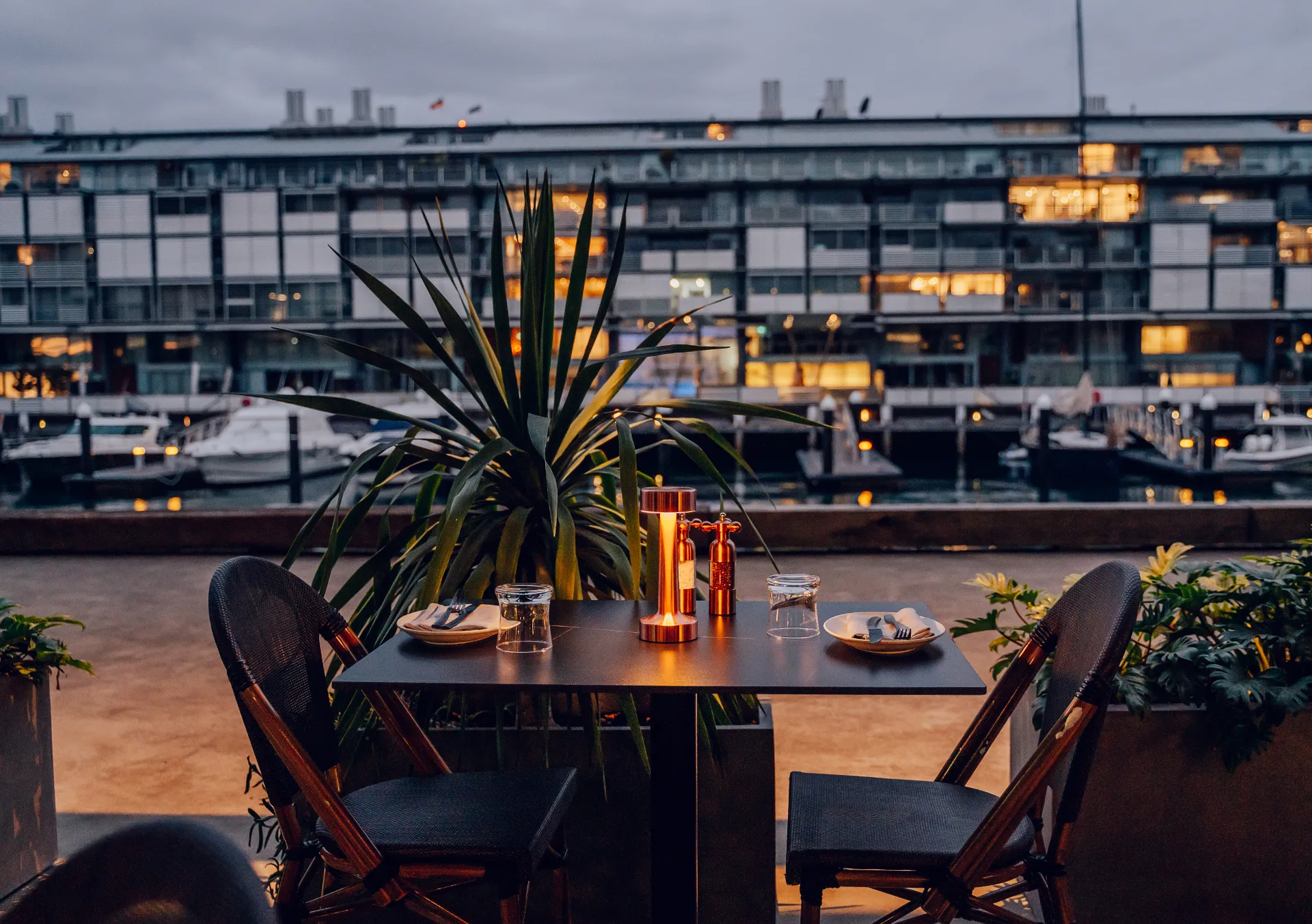
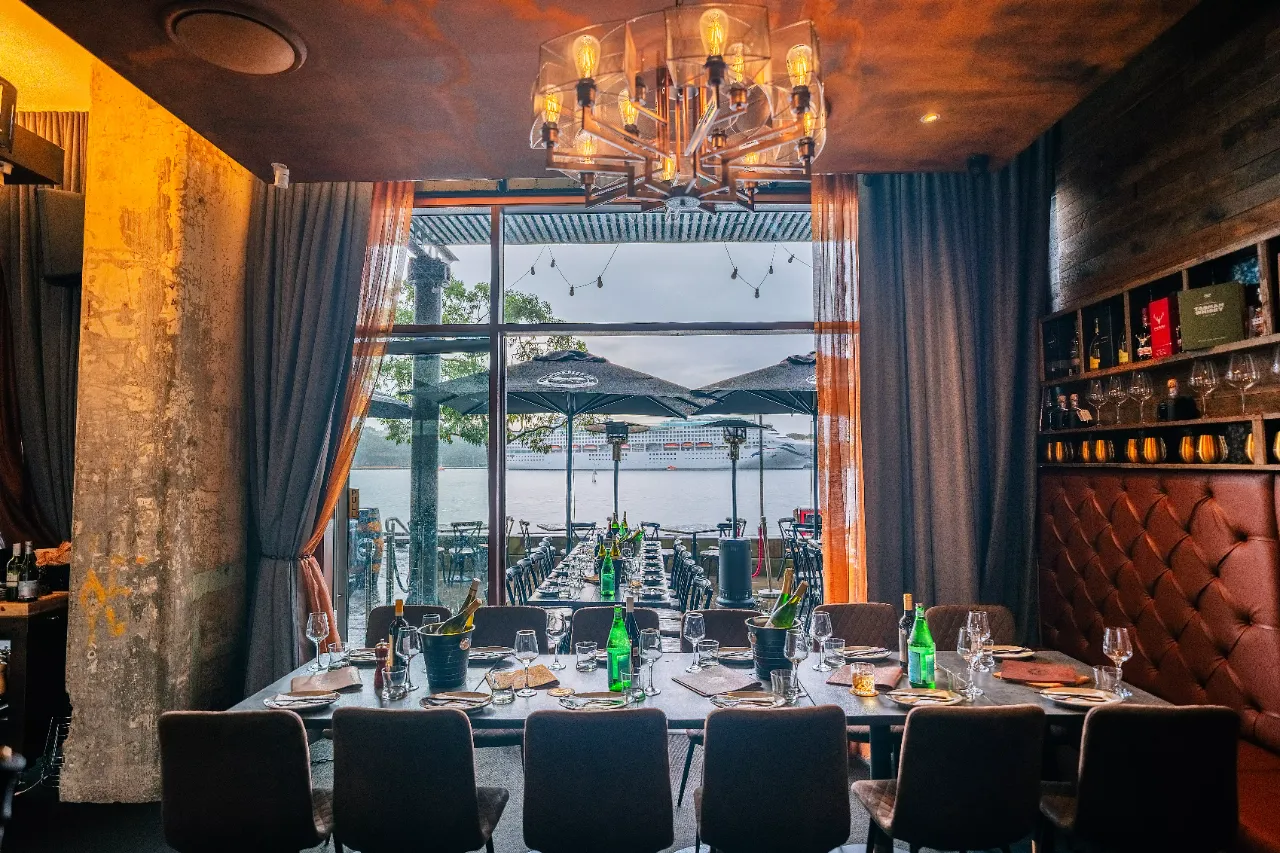
Walsh Bay is on Pier 8/9 at 23 Hickson Road, which puts the harbour a few metres from the table. It is the one to book if the oysters are the occasion.
Pyrmont at 3 Harris Street is a ten minute walk from Sydney Fish Market, and the easier option if you are driving.
For more on the pier precinct and what else is worth a table there, see the Walsh Bay restaurant guide.
Frequently Asked Questions
What is a Sydney rock oyster?
It is Australia's native oyster, Saccostrea glomerata, farmed in NSW estuaries. It takes about three years to reach around 60 grams, and it tastes sweeter and more mineral than a Pacific oyster.
How much do Sydney rock oysters cost?
They are priced individually, with a minimum order of three, and the dressed styles cost more than natural. Current pricing is on the a la carte menu, since it moves with what the growers are charging.
What is the difference between Sydney rock and Pacific oysters?
Sydney rocks are native, smaller, slower growing, with a smooth thick shell and a pale mantle. Pacifics are introduced, larger, faster growing, with a frilly shell and a black mantle edge.
What is oyster mignonette made of?
Shallot, vinegar and cracked pepper, left to macerate. The version served here is built on yuzu kosho and tabasco for citrus and heat.
Are the oysters gluten free?
The natural oysters are dairy free and gluten free. The crudo and grilled oysters carry other ingredients, so mention any requirement when you book.
When are Sydney rock oysters in season?
They are harvested year round and are generally at their best through the cooler months. Supply can pause briefly after heavy rain while estuary water quality is tested.
Book a Table
Half a dozen to start, then the grill. Book a table at Elements Bar & Grill at Walsh Bay or Pyrmont, or call 1300 353 636.