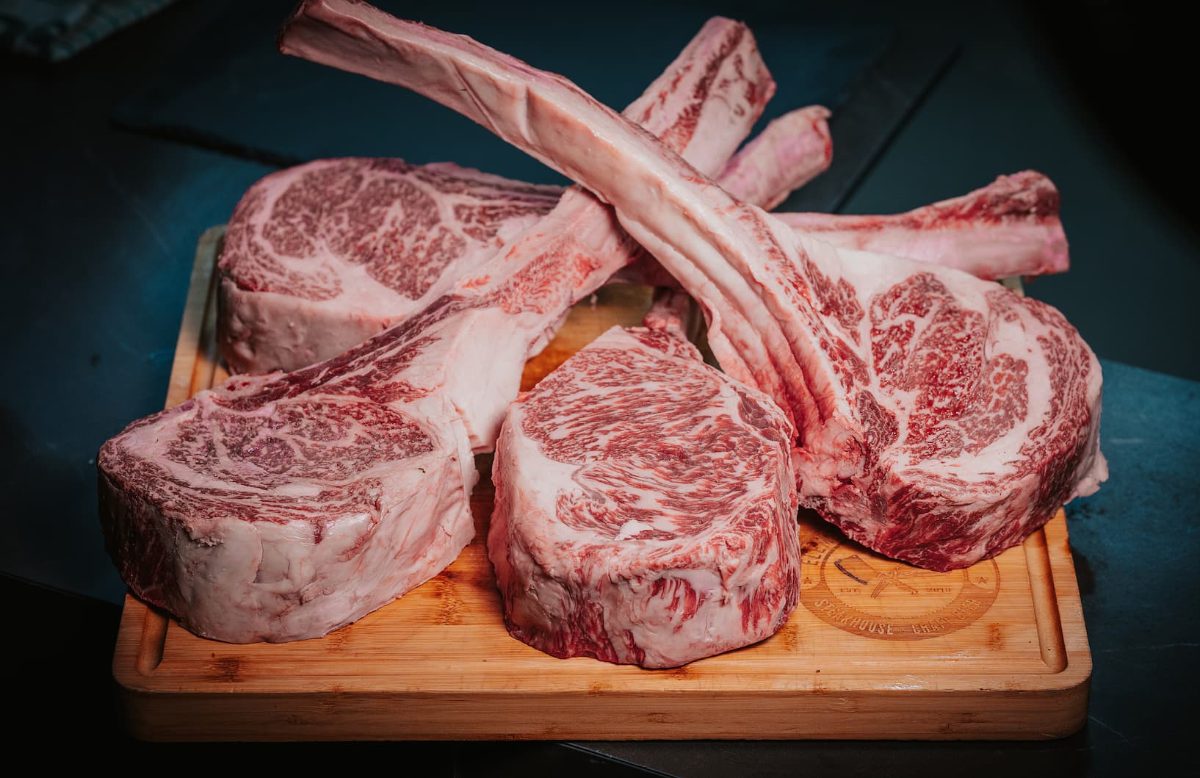

When you order a premium steak, one number tells you more about the eating experience than any other: the marble score. Whether you are curious about Japanese Wagyu’s famous snow-white fat or the Australian grading on your favourite rib-eye, understanding marbling helps you choose the juiciest, most flavour-packed cut on the menu.
What exactly is marbling?
Marbling refers to the fine web of intramuscular fat that runs through a muscle. Unlike the fat you trim from the outside, this delicate white fat melts during cooking, basting the meat from within and delivering that sought-after “melt-in-your-mouth” tenderness and juiciness. More marbling generally equals a richer flavour, a silkier texture and an all-round superior eating experience.
The Australian marbling grading system
Australia uses two overlapping systems:
| System | Scale | Typical wording on menus |
| AusMeat Beef Marbling | 0 – 9 (whole numbers) | “Marble Score 2+”, “MS 4” |
| Australian Wagyu Association (AWA) | 0 – 9, then 9+ | “Wagyu MB 7”, “Wagyu 9+” |
- AusMeat is applied to all beef breeds. A score of 2–3 is considered good restaurant quality, while 4+ signals high-quality grain-fed beef.
- AWA Wagyu scores reflect the extra richness of Wagyu genetics. Anything 7–9 is exceptional; 9+ is the highest grade commercially available in Australia.
What does a 9+ Wagyu mean?
A 9+ Wagyu contains the highest measurable amount of marbling under the Australian system—fat flecks are so dense that the meat looks almost pink‐white. Expect an intensely buttery flavour and a texture you can cut with a spoon.
How do you score marble?
Assessors examine a chilled rib-eye cross-section under bright light and match the fine fat pattern against an official reference card. Key factors include:
- Amount of marbling – How much white fat is visible?
- Distribution – Is the marbling spread evenly?
- Texture – Are fat flecks fine and feather-like?
Training is rigorous, ensuring your marble score is a reliable guide no matter which abattoir graded the beef.
What is a good marble score?
- For everyday diners seeking a balance of flavour and value, MS 2–3 is ideal.
- Serious steak lovers often step up to MS 4–5 for deeper beefiness and extra juiciness.
- If you crave the ultimate indulgence, Wagyu MB 7–9+ delivers a once-in-a-lifetime level of richness—best enjoyed in modest portions so the luxurious fat can truly shine.
Need a refresher on the breed behind those numbers? Have a quick read of what is Wagyu beef to see why its genetics matter so much to marbling.
Australian vs Japanese grading
Japan’s famous A5 Wagyu uses a different scale—BMS no. 12 is roughly equivalent to our 9+. The good news? Thanks to Australia’s grass-fed heritage and meticulous grain-finishing programs, premium local Wagyu rivals its Japanese cousin for flavour while remaining more sustainable and affordable to enjoy in Sydney.
Matching marble scores to steak cuts
Certain cuts showcase marbling better than others:
- Rib-eye / Scotch Fillet – deep channels of fat for a luscious bite.
- Sirloin / Striploin – slightly leaner but still displays marbling beautifully.
- Eye Fillet – naturally lean, so look for MS 4+ to keep it buttery.
- Short Rib – slow-cooking turns marbled fat into silky richness.
For a full cut-by-cut guide, browse which steak cut is best before you book.
Elevate your next steak night
Ready to put your new-found grading knowledge to delicious use? At Elements Bar and Grill, we source only top-notch Australian cattle, dry-age them in-house and list every marble score on the menu—from a grass-fed Sirloin MS 2+ to a show-stopping Black Opal Wagyu 9+.
Our dedicated dry-aging chambers coax out nutty, concentrated flavours, while our chefs have mastered the sear that lets fine white fat melt just enough to coat the palate. Whether you fancy a 300 g Scotch Fillet for mid-week comfort or a 1.4 kg Tomahawk MS 2+ to share, your perfect score is waiting.
👉 Explore the full steak range and current marble scores on our steak list, then book a table at Pyrmont, Walsh Bay or Haberfield to experience The Elements Difference first-hand.
Your quest for the highest grade—and greatest flavour—starts (and deliciously ends) at Sydney’s best steakhouse. See you at the grill!