There are steaks, and then there is Wagyu. A single bite can stop a conversation mid-sentence, because the fat melts at a lower temperature than ordinary beef fat and coats the meat as you eat it. That is the whole trick, and everything else, the breeds, the grades, the price, follows from it.
This guide covers what Wagyu beef actually is, which cattle it comes from, how the Japanese and Australian grading systems work, what A5 and MB9 mean on a menu, and why a Wagyu steak costs what it does.
What Is Wagyu Beef, Exactly?
Wagyu is beef from a group of Japanese cattle breeds bred over generations for intramuscular fat. The word translates as "Japanese cow", and the defining trait is marbling: fine threads of fat running through the muscle rather than sitting around it.
Four Japanese breeds carry the name. Japanese Black, or Kuroge, is by far the most common and produces the beef most people picture when they hear Wagyu. The others are Japanese Brown (Akage), Japanese Shorthorn and Japanese Polled.
Those cattle were originally working animals, valued for endurance in the fields. Over generations, farmers selected for animals that carried fat inside the muscle rather than as a covering layer, and that selection is what produced the Wagyu we know now. Outside Japan, Wagyu genetics are often crossed with local breeds such as Angus, which is why you will see both purebred and crossbred Wagyu on Australian menus.
What Makes the Marbling Different
Marbling is not just about quantity. Wagyu fat has a higher proportion of monounsaturated fat than conventional beef fat, and that changes its melting point. It softens at a lower temperature, which is why a Wagyu steak feels like it is dissolving rather than being chewed.
The practical effect shows up in the pan. Because the fat is distributed evenly through the muscle, the meat bastes itself as it cooks, so a well marbled Wagyu steak stays juicy at medium rare where a leaner cut would be drying out. It also means the flavour is spread through every bite instead of concentrating at the fat cap.
That fineness is also why Wagyu is cooked differently. The fat renders quickly, so a hot fast sear and a short rest gets you the texture; a long cook does not.
The Japanese Grading System: What A5 Means
Japanese Wagyu carries two grades in one label. A letter from A to C for yield, and a number from 1 to 5 for meat quality. A5 is the top of both scales: highest yield, highest quality.
The yield grade measures how much usable meat comes off the carcass. A is the highest. The quality grade assesses four things: marbling, meat colour and brightness, firmness and texture, and the colour and quality of the fat. The lowest of those four scores sets the overall number, so a carcass has to perform on all of them to reach 5.
Underneath that sits the Beef Marbling Standard, or BMS, which runs from 1 to 12 and measures marbling alone. BMS is what separates one A5 from another, because the A5 band covers BMS 8 through 12.
| Grade | BMS range | What it eats like |
|---|---|---|
| A5 | 8 to 12 | The most intense marbling, buttery and very rich; a smaller serve goes a long way |
| A4 | 6 to 8 | Excellent marbling with a little more beef character and less richness |
| A3 | 5 to 7 | Good marbling, closer to a premium conventional steak |
| A1 | 1 to 2 | High yield but minimal marbling; the lowest quality grade, not the highest |
Which grade of Wagyu is best?
A5 with a BMS between 8 and 12 is the top of the system, and it is what most fine dining rooms serve when they list Japanese Wagyu. It delivers the most intense marbling, a buttery flavour and a texture that gives way with almost no resistance.
Is A4 or A5 Wagyu better?
A5 is the higher grade, but better depends on what you want from the plate. A4 sits around BMS 6 to 8 and keeps more beef flavour alongside the richness, which some people prefer over a full serve of A5. If you are ordering a larger cut rather than a tasting portion, A4 is often the easier eat.
Is A1 better than A5 Wagyu?
No, and this catches people out. The letter and the number measure different things. A1 means high yield with the lowest quality grade, so minimal marbling and less tenderness. A5 is the top of the system. If you only remember one thing, remember that the number carries the quality.
How Wagyu Is Graded in Australia
Australia runs a different scale. Marbling here is scored under the AUS-MEAT system, which runs from 0 for nil to 9 for abundant, and is assessed visually in the eye muscle against reference standards. That is where the MB numbers on an Australian menu come from: MB7 and MB9 are AUS-MEAT marbling scores, not Japanese grades.
Meat Standards Australia runs alongside it as an eating quality system, and it uses a much finer marbling scale of its own, from 100 to 1,190, taking in both the amount of marbling and how evenly it is distributed. Meat and Livestock Australia sets out how both are assessed.
| Japan | Australia | |
|---|---|---|
| Marbling scale | BMS 1 to 12 | AUS-MEAT 0 to 9 |
| Overall grade | Yield A to C plus quality 1 to 5 | MB score, often with an MSA eating quality grade |
| Top of the scale | A5, BMS 12 | MB9, sometimes written MB9+ |
| Typical top tier on a menu | A5 Wagyu | MB8 to MB9 Wagyu |
The two are not directly interchangeable. An Australian MB9 is exceptional beef, and it sits in the same territory as the lower end of the Japanese A5 band rather than at the top of it.
Kobe, Hyogo and the Regional Names
Kobe is not a breed. It is a protected name for Japanese Black cattle raised in the Hyogo Prefecture that meet strict standards for marbling, yield and quality. Very little of it leaves Japan, which is why the name is misused so often on menus overseas.
Other Japanese regions produce outstanding Wagyu under their own names, including Mie and Shiga. The differences between them come down to local climate, feed and breeding traditions rather than any change to the underlying grading system.
Australian Wagyu vs Japanese Wagyu
Australia is now one of the largest Wagyu producers outside Japan. Most Australian Wagyu is crossbred, usually Wagyu over Angus, which adapts the genetics to local conditions while keeping the marbling. Purebred and fullblood Wagyu are also raised here, at higher cost.
The difference on the plate is real. Japanese Wagyu is the richer and more delicate of the two, built for small portions. Australian Wagyu carries more of a beefy backbone underneath the marbling, which makes it better suited to a full steak rather than a tasting slice. Neither is objectively better; they suit different meals.
If you want to see where Wagyu sits against the rest of a steakhouse board, our guide to Australian steak cuts compares sirloin, eye fillet, T-bone and rib eye on tenderness and flavour.
Why Wagyu Costs What It Does
Three things drive the price, and none of them are marketing.
The first is time. Wagyu cattle are fed for far longer than conventional beef cattle, often 350 days or more on a controlled grain ration, because marbling develops slowly and cannot be rushed. That is a year of feed and care per animal before anything reaches a butcher.
The second is yield. The highest marbling scores are rare even within a Wagyu herd, so an MB9 or an A5 carcass represents a small fraction of what a producer raises. Genetics get you the potential; feeding, handling and luck decide whether it lands.
The third is grading and traceability. Every carcass is assessed, scored and documented, and the premium cuts are sold against that paperwork. When a menu says MB9 or A5, it is quoting a graded result rather than an opinion.
How to Order and Cook Wagyu
Order smaller than you would a conventional steak. Wagyu is rich, and a 200g serve of A5 will satisfy most people more than a 300g serve of anything leaner. If you are new to it, start at the MB7 end rather than the top of the scale.
Cook it hot and fast, and stop earlier than feels right. Medium rare is the ceiling for a highly marbled cut, because pushing further renders out the fat that you paid for. Season lightly. Salt and heat are doing the work, and heavy sauces fight the flavour rather than supporting it.
Rest it properly, then slice across the grain. Thin slices suit high marble scores better than thick ones, which is why a lot of kitchens serve MB7 and above sliced rather than whole.
Wagyu at Elements Bar and Grill
Our a la carte menu runs Wagyu across the full range of the scale rather than at one price point. The MB9 Wagyu Skirt Steak at 250g is $78 and is the easiest entry to the style. The MB9 Wagyu Sirloin at 300g and the MB9 Wagyu Eye Fillet at 250g both sit at $199, and the MB7 Wagyu Scotch Fillet at 400g is $199, served sliced. Prices are current at the time of writing.
At the top of the list is genuine Japanese A5. The Japanese A5 MB9++ Wagyu Sirloin at 200g is $259, and the portion size is deliberate; that is a serve built around richness rather than volume. Add a hot stone to any steak for $8 and you can sear each slice at the table, which suits high marble scores particularly well.
For a table rather than a plate, the premium steak upgrades carry the large format Wagyu: an MB9 Wagyu Tomahawk at 1.6kg for $499 or 2kg for $599, and a salt baked MB9 Wagyu Eye Fillet at 500g for $399. Those need 24 hours notice, so ask for them when you book rather than on the night.
Wagyu FAQs
What does Wagyu mean?
Japanese cow. "Wa" means Japanese and "gyu" means cow, so the word describes origin rather than a single breed. Four Japanese breeds carry the name, with Japanese Black the most widely raised. Cattle bred from those genetics outside Japan are still called Wagyu, usually with the country of origin attached.
What is the difference between Wagyu and regular beef?
Marbling, and the type of fat. Wagyu carries far more intramuscular fat, and that fat has a higher share of monounsaturated fat, so it melts at a lower temperature and gives the meat its buttery texture. Conventional breeds such as Angus and Hereford produce leaner beef with the fat sitting more around the muscle than through it.
Is A5 Wagyu worth it?
For a small serve, yes, and that is how it is best ordered. A5 is the highest grade in the Japanese system and the texture is unlike anything else on a steak menu. For a full sized steak most people find MB7 to MB9 Australian Wagyu the better eat, because it carries more beef flavour alongside the richness.
What does MB9 mean on a menu?
It is an AUS-MEAT marbling score of 9, the top of the Australian scale, which runs from 0 to 9. It is not the same thing as a Japanese A5, which combines a yield grade with a quality grade and sits on a marbling scale running to 12. Both indicate exceptional beef, measured differently.
How should Wagyu be cooked?
Hot, fast, and no further than medium rare. The fat renders quickly, so a long cook loses the texture that makes the cut worth ordering. Season simply, rest it, and slice thinly across the grain. If you like your steak well done, a leaner cut will give you a better result and cost you less.
Is Kobe beef the same as Wagyu?
All Kobe is Wagyu, but very little Wagyu is Kobe. Kobe is a protected designation for Japanese Black cattle raised in the Hyogo Prefecture that meet strict grading standards, and export volumes are tiny. Treat the name with scepticism on any menu outside Japan unless certification is stated.
Try It at Pyrmont or Walsh Bay
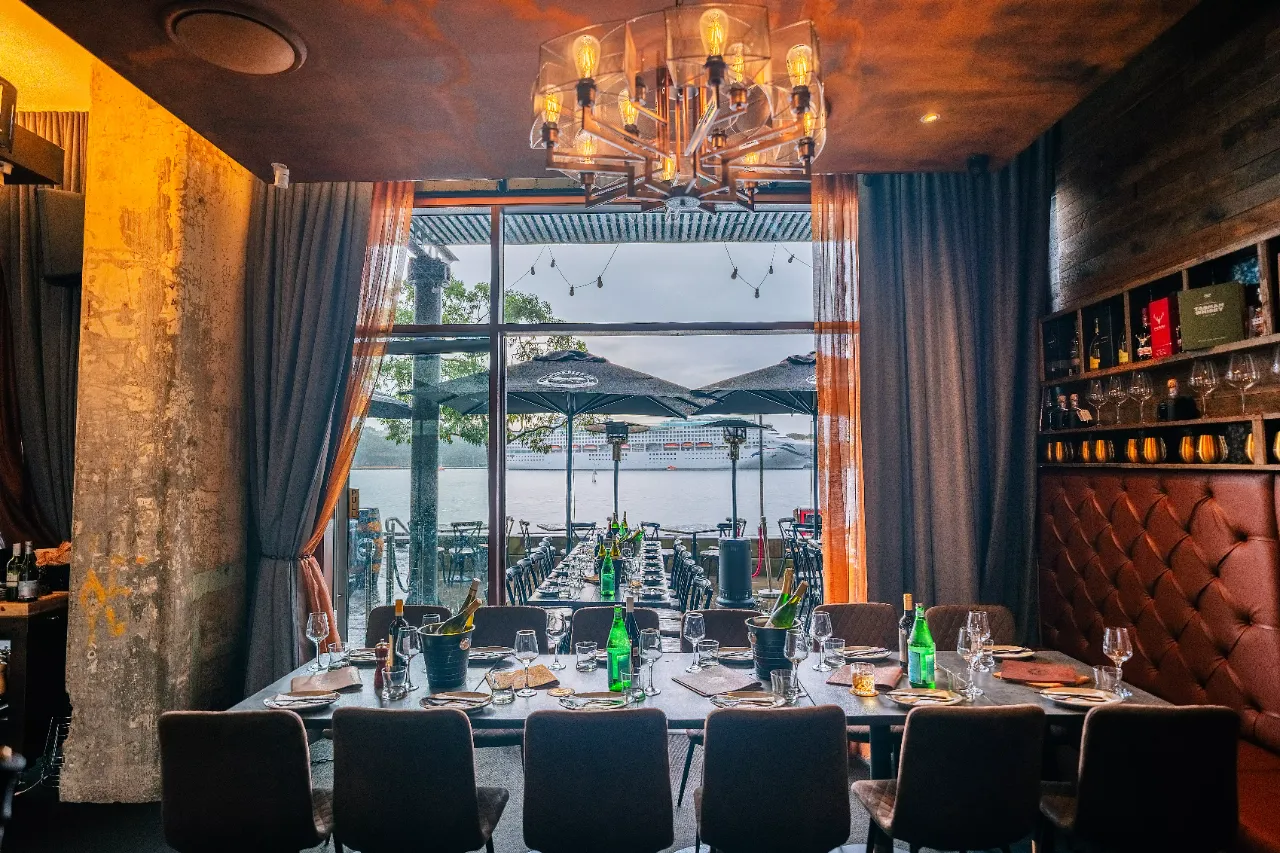
Elements buys premium Australian beef and genuine Japanese A5, butchers and ages it properly, then cooks it hot so the crust holds and the centre stays where you asked for it. Both dining rooms sit on the water, at Walsh Bay on a heritage pier and at Pyrmont overlooking Johnstons Bay, and the floor team can walk you through the marble scores if the menu reads like a code.
Book a table at Elements Bar and Grill or call 1300 ELEMENTS (1300 353 636). Mention the pre-order cuts when you book if you are after the large format Wagyu, so the kitchen has the notice it needs.