Every year, on the seventh day of the seventh lunar month, one of China's most enduring love stories is quietly retold. Qixi Festival, known in English as the Double Seventh Festival or Chinese Valentine's Day, is a celebration rooted in a 2,600-year-old tale of star-crossed lovers, a celestial river, and the wings of ten thousand magpies.
It is one of the oldest romantic occasions in the world, and today it is celebrated by millions of people across China, Asia, and Chinese communities worldwide, including here in Sydney.
The Legend Behind Qixi Festival
The story at the heart of Qixi is the love between Niulang, a humble cowherd and mere mortal, and Zhinü, the seventh daughter of the Queen Mother of Heaven and the most gifted weaver girl in the sky. The two met when Zhinü descended to earth, fell in love, married, and had two children together. For a time, their life was simple and happy.
When the Queen Mother of Heaven discovered that her daughter had married a mortal, she was furious. She used her silver hairpin to draw the Milky Way across the sky, separating the two lovers on opposite sides of what the Chinese tradition calls the Silver River. Niulang and Zhinü were left to gaze at each other across the heavens, unable to cross.
Their grief moved the magpies of the world, who gathered each year on the seventh night of the seventh lunar month to form a bridge across the Milky Way. On that night alone, Niulang and Zhinü are reunited. It is said that if it rains on Qixi night, the drops are the tears of the two lovers as they part again at dawn.
In the summer sky, the two stars associated with this story are visible to the naked eye. Vega, the bright star in the constellation Lyra, represents Zhinü the Weaver Girl. Altair, in the constellation Aquila, represents Niulang the Cowherd. On clear Qixi evenings, stargazers look for the two stars on either side of the Milky Way and trace the ancient story in the sky.
When Does Qixi Festival Fall?
Qixi Festival falls on the seventh day of the seventh month of the Chinese lunar calendar, which means its date shifts each year on the Gregorian calendar. It typically falls anywhere between late July and late August, roughly 21 to 51 days after the Gregorian date of July 7.
In 2026, Qixi Festival falls on Wednesday, 19 August.
Because the date changes annually, it is worth checking the lunar calendar each year rather than marking a fixed date. The festival is not a public holiday in China, but it is widely observed among couples and young people, with shop promotions, romantic campaigns, and cultural events marking the occasion across modern China and Chinese communities globally.
A Brief History: From the Daughters' Festival to Chinese Valentine's Day
Qixi has been celebrated since the Han Dynasty, which spanned from 206 BC to 220 AD. In its earliest form, the festival was less about romantic love and more about the skills of young women. It was historically known as the Qiqiao Festival, which translates roughly as the Festival of Skill, or the Daughters' Festival.
During ancient Qixi celebrations, young women would pray to Zhinü for skill in needlework and weaving. Needlework was considered one of the most important abilities a woman could possess, and Zhinü, as the most gifted weaver in heaven, was the natural figure to petition. Girls would gather in the evening, thread needles by moonlight, and compete in sewing and weaving to demonstrate their craft. Offerings of fruit and thin fried pastries known as Qiaoguo, or skill fruit, were made at household altars in her honour.
In some regions, seven friends would gather to make dumplings together, hiding a needle, a coin, and a date inside the batch. Whoever found the needle in their dumpling was believed to gain skill in needlework. The coin brought good fortune. The date was understood to promise an early and happy marriage.
Over centuries, as the legend of Niulang and Zhinü became more widely told and the festival's romantic associations grew stronger, Qixi gradually shifted from a celebration of feminine skill into a celebration of love and partnership more broadly. The rise of the Magpie Bridge story cemented the connection between Qixi and romantic reunion, and by the time the festival reached modern China, it had taken on many of the characteristics of Valentine's Day in the Western world.
How Qixi Is Celebrated Today
Modern Qixi looks quite different from its ancient form, though threads of the old traditions remain. In contemporary China and across Chinese communities worldwide, couples mark the festival by exchanging gifts such as flowers, jewellery, and chocolates, booking romantic dinners, and spending the evening together in ways that echo the reunion of Niulang and Zhinü. The occasion has become one of the most commercially significant days in the Chinese retail and hospitality calendar.
At the same time, some traditional customs continue. Stargazing remains a popular activity on Qixi night, with couples looking for Vega and Altair in the summer sky and tracing the Milky Way between them. In some families and communities, the Qiaoguo pastry tradition is still observed. In parts of Japan and Korea, where similar festivals derived from the Qixi story are celebrated under the names Tanabata and Chilseok respectively, local customs and foods have developed their own distinct forms.
In Sydney, the festival is marked through cultural events, romantic dining, and community gatherings in neighbourhoods with significant Chinese populations. It is an occasion that blends Chinese tradition with the rhythms of daily life in a multicultural city.
Qixi versus Western Valentine's Day
The two festivals share a celebration of romantic love but differ significantly in origin, timing, and tradition. Western Valentine's Day falls on February 14 every year, drawing on ancient Roman and early Christian traditions. Qixi moves with the lunar calendar, falling in the heat of late July or August, and is rooted in Chinese folklore that stretches back more than two millennia.
Where Valentine's Day centres on the exchange of cards, flowers, and chocolates, Qixi carries the weight of the Niulang and Zhinü story, the custom of stargazing, the historical focus on feminine skill and aspiration, and the symbolism of the magpie bridge. The two festivals have converged in their modern commercial expressions, but they remain culturally distinct in origin and meaning.
Both are, at their core, occasions to set aside ordinary time and acknowledge the people we love.
Celebrating Qixi in Sydney: A Dinner Worth Planning
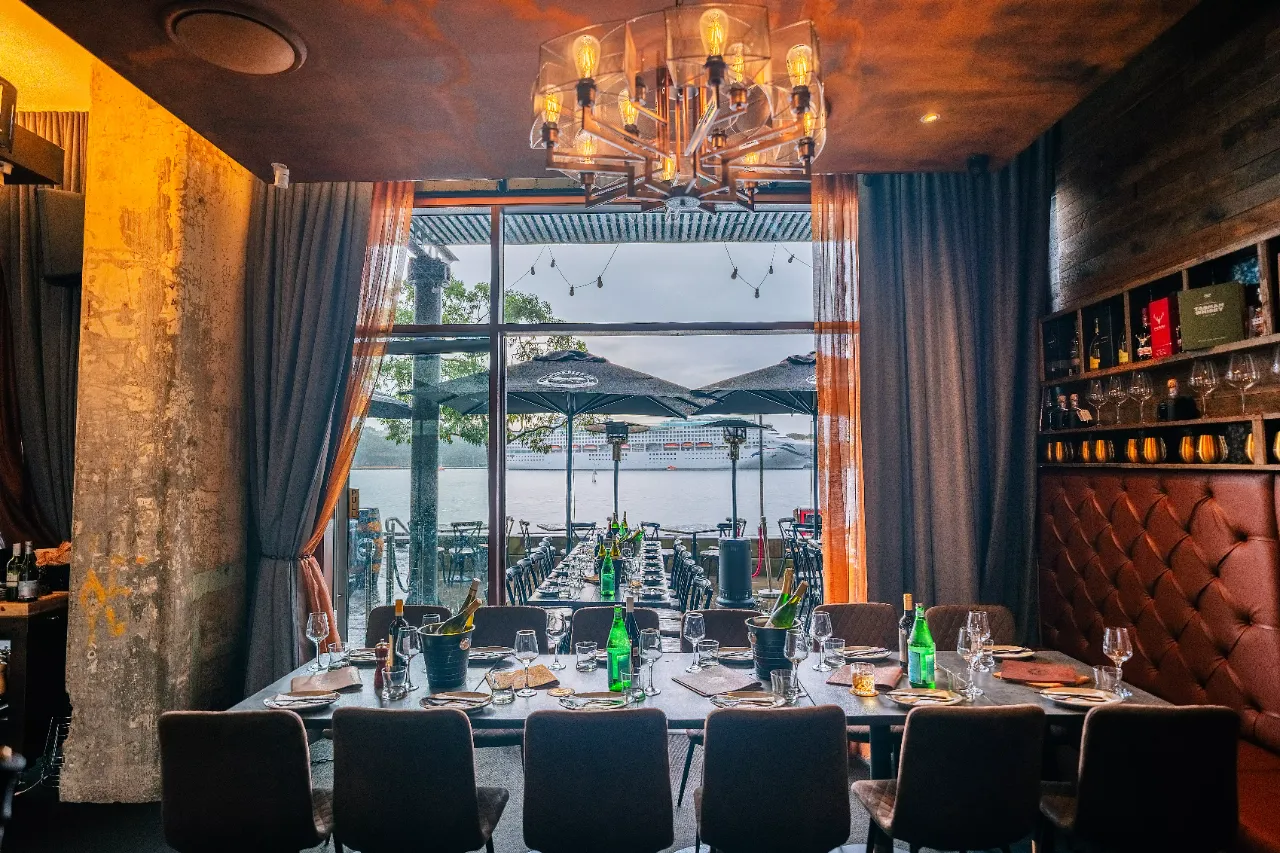
For couples in Sydney looking to mark Qixi Festival with a proper occasion, a dinner that matches the weight of the evening is worth planning. Elements Bar and Grill offers a setting well suited to a romantic celebration, with intimate dining rooms, a waterfront atmosphere across its Pyrmont and Walsh Bay venues, and a kitchen menu that naturally lends itself to the shared, occasion-centred dining that Qixi calls for.
Dishes worth considering for a Qixi dinner include the creamy crab linguine, which can be elevated tableside into a full lobster experience, the fried burrata in spicy vodka sauce to open, and the MB9 Wagyu eye fillet or the carved-tableside dry-aged rib eye on the bone for the centrepiece. The dulce de leche tiramisu or pistachio panna cotta rounds out the evening. The steak tasting platter, designed to be shared, mirrors the communal spirit that has always sat at the heart of Qixi.
Reservations can be made. For an evening as significant as Qixi, booking ahead is the simplest way to make sure the night goes the way it should.
FAQs
What is Qixi Festival?
Qixi Festival, also known as the Double Seventh Festival or Chinese Valentine's Day, is a traditional Chinese celebration rooted in the love story of Niulang and Zhinü. It falls on the seventh day of the seventh lunar month and has been observed since the Han Dynasty.
When is Qixi Festival in 2026?
Qixi Festival falls on Wednesday, 19 August 2026.
Why is it called the Double Seventh Festival?
The name refers to its date in the Chinese lunar calendar: the seventh day of the seventh month, which is why it is also called the Double Seventh or 7/7 Festival.
What do people eat during Qixi?
The traditional food associated with Qixi is Qiaoguo, a thin, fried sweet pastry offered to Zhinü. In some regions, dumplings are made with lucky objects hidden inside.
How is Qixi different from Valentine's Day?
Western Valentine's Day falls on February 14 every year and has roots in Roman and Christian tradition. Qixi follows the lunar calendar, usually falling in August, and is grounded in Chinese folklore. Both celebrate romantic love, but with distinct customs and cultural meanings.
Is Qixi a public holiday?
No. Qixi is not an official public holiday in China, but it is widely celebrated, particularly among couples and young people.